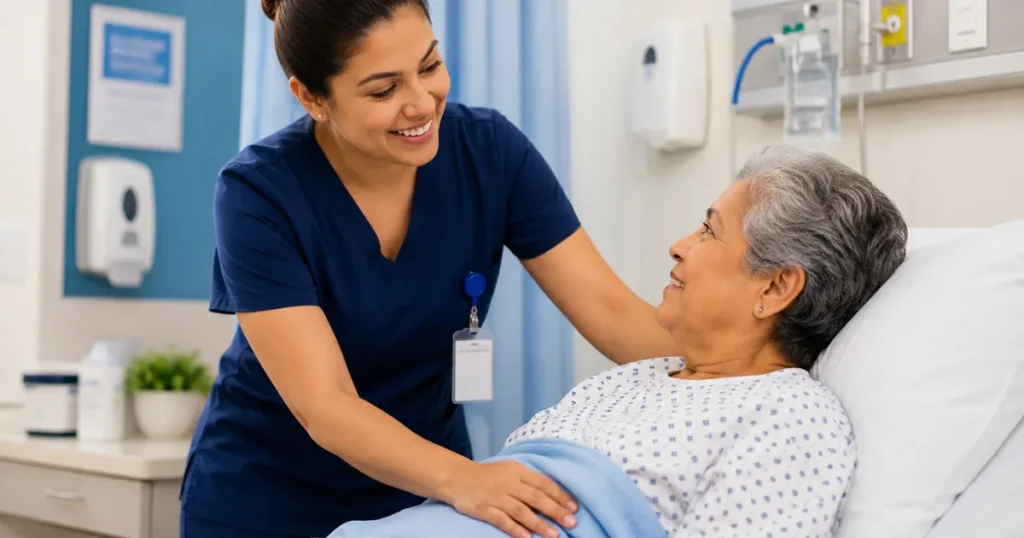
In the United States, the position of graduate nurses It refers to those who have successfully completed a nursing program, either an associate degree (ADN) program or a bachelor's degree (BSN) program, and have obtained the license to work as registered nurses (RN). These educational programs combine theoretical classroom studies with supervised clinical practice, providing graduates with in-depth knowledge of healthcare, disease management, medical ethics and practical skills for caring for patients in a variety of medical settings.
Registered nurses in the United States can work in a variety of settings, such as hospitals, clinics, nursing homes, and other healthcare facilities, once they graduate and are licensed. Furthermore, Through further education and certifications, they can specialize in specific areas such as pediatrics, geriatrics, intensive care, and operating rooms, among others. Registered nurses are crucial in patient care, not only in direct care but also in the planning and evaluation of care plans. and in the education of patients and families on the management of the conditions of health.
Responsibilities
In the United States, registered nurses have a wide range of duties and benefits, including clinical and administrative roles. Here is a complete list:
- Patient health status assessment: Conduct a comprehensive assessment of the patient's health status upon admission and throughout their stay in the hospital or clinic.
- Medication administration: preparing and administering medications according to medical prescriptions and monitoring their effects.
- Direct patient care: providing direct care in situations that require it, such as changing bandages, administering injections, and assisting with medical procedures.
- Patient and family education: Informing patients and their families about health conditions, treatments, and care plans.
- Organization of care: To ensure comprehensive and effective treatment, collaborate with other healthcare professionals.
- Maintaining medical records: record interventions and patient responses.
- Control of auxiliary staff: supervise the work of nursing assistants and nursing technicians.
- Emergency Response: Providing critical care in emergency situations.
- Promoting healthy behaviors: helping patients adopt healthy habits and preventive measures.
- Clinical research: Participate in research that improves health practices and patient outcomes.
- Professional development and training: Participate in ongoing training to keep your skills and knowledge up to date.
Benefits
- High job demand: Nursing is a profession with high job demand in the United States, which provides job security.
- Diversity of fields: opportunities to specialize in a variety of medical disciplines.
- Flexible hours: Possibility of working different shifts according to your needs.
- Opportunities for advancement: There are opportunities to advance to educational or administrative positions within the health system.
- Significant impact: There is a possibility of having a significant impact on the lives of patients and their families.
- Competitive benefits: better salaries, medical benefits, and retirement opportunities.
- Continuous learning: courses and certifications provide opportunities to continue learning and developing professionally.
- Teamwork: collaborating with a diverse team of medical professionals.
- Respect for the profession: respect and recognition as an integral part of the healthcare system.
- Personal satisfaction: deep personal satisfaction obtained by improving the living conditions of others and caring for them.
These characteristics and advantages demonstrate the relevance and diversity of the role of graduate nurses in the United States health system.
Requirements
The following are some of the common requirements for graduate nurses in the United States:
- High school diploma or GED.
- Associate Degree in Nursing (ADN) or Bachelor of Science in Nursing
- Approval of the National Council Licensing Examination (NCLEX-RN).
- Bachelor's degree in nursing registered in the state where you will be working.
- Basic life support (BLS) and cardiopulmonary resuscitation (CPR) certifications.
- Supervised clinical experience (depending on the state and employer)
- Check his criminal record and drug use.
- Up-to-date medical exams and vaccinations.
- If necessary for specialization, obtain certification in Advanced Adult Life Support (ACLS).
- Effective communication skills in English.
- Instructions on medical data protection and patient privacy under HIPAA.
Monetary benefits
These are some of the most common economic benefits associated with the position of registered nurse in the United States:
- $63 per hour
- Bonus for signing
- Performance-based rewards.
- Additional payments for overtime.
- Differentials per shift
- Differences based on their specialization
- Scholarships for continuing education and tuition reimbursements.
- Contributions to retirement plans, such as 401(k).
- Rewards for hiring new employees.
- Compensation for work in remote areas or high-risk zones.
For more information about the position and application instructions, Visit the official website.
🔔 Free job alerts
Receive new US job openings in your email.
Every week: new job openings, guides, and resources. Plus, a free CV template pack.