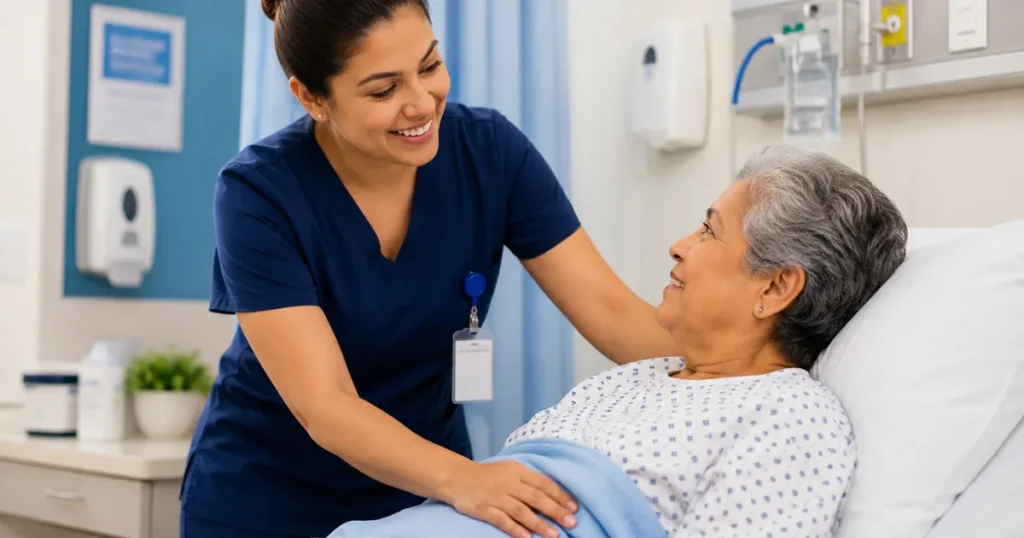
The role of a nursing assistant in the United States, also known as a Certified Nursing Assistant (CNA), is an important part of the healthcare system. CNAs provide direct patient care under the supervision of registered nurses or senior medical staff. Patients can perform daily tasks such as bathing, dressing, and moving around. They can also handle tasks such as changing bed linens, preparing meals, and assisting patients with toileting. The CNAs monitor vital signs and report any changes in the patients' condition to the nurses in charge.
To have this job, CNAs must complete a training program and obtain state certification. The program includes classroom education and clinical practice. CNAs must possess technical skills and empathy to communicate effectively with patients and their families. CNAs are crucial to patient well-being and comfort.
Responsibilities
Nursing assistants (NAs) in the United States have a wide range of duties and responsibilities in their daily work. Their jobs can vary depending on their workplace, such as hospitals, nursing homes, rehabilitation centers, or home health care. Here is a detailed list of what they do.
- Attend daily activities.
- Transport and mobility
- Monitoring and control
- medical care, basic nursing care
- Emotional and social-emotional support
- Maintaining the environment.
- Working with the medical team.
These are some of the important duties of a nursing assistant in the United States. Versatility and empathy are important characteristics for performing this role.
Benefits
Becoming a Certified Nursing Assistant (CNA) in the United States can offer many benefits, both professionally and personally. Benefits may vary depending on the employer and work environment, but in general, nurses can enjoy the following advantages:
- Job stability
- Competitive salary
- Training and education
- Flexible shifts
- Health and wellness benefits
- License per service
- Professional growth opportunities
- Reasonable objective
- Skills development
- Pension
- Benefits and wellness programs
- Teamwork environment
- These benefits can make a nursing position attractive to those interested in working in the healthcare industry.
Requirements
Working as a Certified Nursing Assistant (CNA) in the United States requires certain qualifications that must be met in order to become certified and work in this position:
- Age
- Education and training
- Certification exam
- Background check
- Health check-up
- State registry
- Communication skills
- Empathy and compassion
These are general requirements to work as a nursing assistant in the United States. In addition to the above requirements, some states may have specific additional requirements for maintaining certification, such as continuing education. CNAs should verify their state's specific requirements to ensure compliance with all necessary regulations.
Monetary benefits
Here is a long list of financial benefits that employers can offer to certified nursing assistants (CNAs) in the United States:
- Hourly wage $28
- Overtime pay.
- Pays for night or weekend shifts.
- Performance bonus.
- Bonus for signing.
- Keep the bonus.
- Additional training or certification costs.
- Salary increase based on experience.
- Payment for paid vacation time (vacation, holidays, sick leave).
- Health insurance is fully or partially insured by the employer.
- Dental and vision insurance.
- Life and disability insurance. If you work from home, your travel expenses will be reimbursed.
- Reimbursement of transportation costs.
These benefits may vary depending on the employer, location, and other factors, but these are some common financial benefits that CNAs may receive. For more information on openings and to apply, Visit the official website for more details.
🔔 Free job alerts
Receive new US job openings in your email.
Every week: new job openings, guides, and resources. Plus, a free CV template pack.